ITIL Foundation Version 5 Certification Training in Aichi
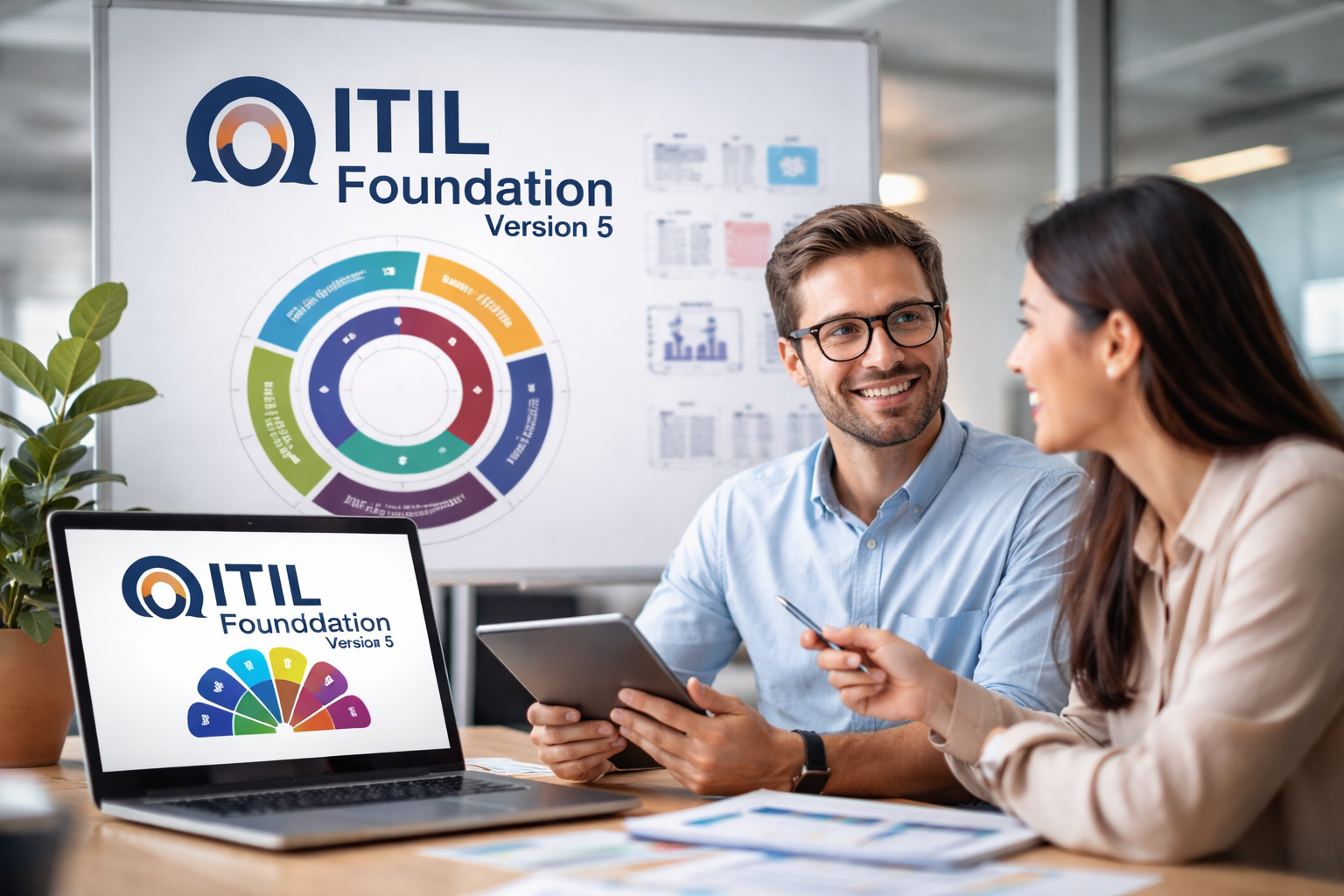
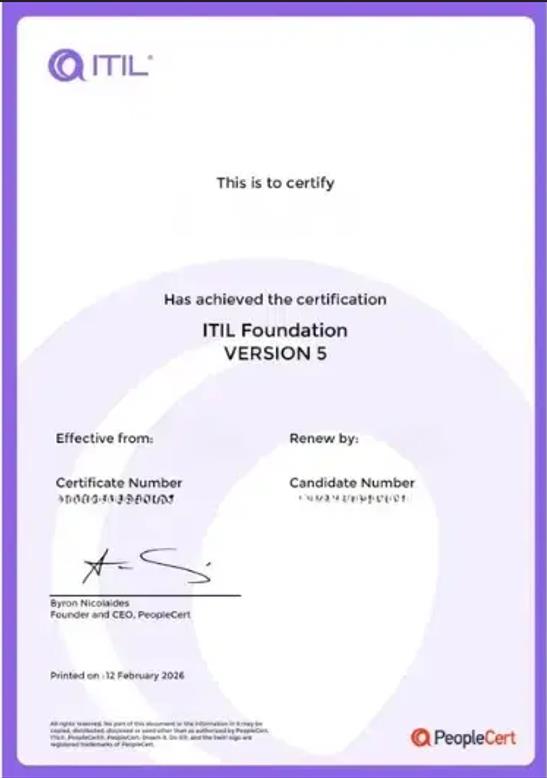
ScholarAcad’s 2-day ITIL Foundation Version 5 course in Aichi helps service desk, IT support, application, infrastructure, and delivery teams connect frontline tickets with executive value. The certification exam is managed by PeopleCert, and ITIL Foundation Version 5 is the prerequisite for higher-level ITIL Version 5 modules.
Industry Case Study: Automotive Manufacturing, Factory Automation, Robotics, Embedded Software, Supply-Chain Systems, And Connected Mobility
An Aichi automotive supplier schedules a production-system update after a shift change. The patch is technically successful, but a connected inspection station stops syncing results to the quality dashboard. Manufacturing blames IT, IT blames the vendor, and quality teams cannot confirm release readiness. ITIL V5 turns this into a value-stream discussion: who is the service consumer, what outcome failed, who owns the supplier handoff, and what improvement prevents repeat failure?
Regional Business Ecosystem
The Aichi business corridor includes Nagoya, Toyota City, Kariya, Okazaki, Komaki, Anjo, and the wider Chubu automotive supplier corridor. Learners can explore career paths with employers such as Toyota; DENSO; AISIN. These environments need professionals who can translate incidents, SLAs, change risk, and supplier performance into business language.
What You Will Learn and Gain
In Aichi, ITIL V5 helps professionals manage technology in disciplined, supplier-heavy manufacturing environments. You learn how to balance stability, automation, governance, incident response, and continual improvement without blocking the speed required by modern automotive operations.
Core Architecture: IVS and Product/Service Lifecycle
ITIL V5 teaches an integrated model of guiding principles, governance, value chain activities, practices, and continual improvement. It also explains the Product and Service Lifecycle: discover, design, acquire, build, transition, operate, deliver, and support. ScholarAcad connects the ITIL Foundation Version 5 seven guiding principles to practical Aichi scenarios, while the ITIL V5 complete trainers guide gives useful pre-course context.
Expert Mentorship
The course is delivered through ScholarAcad’s mentor network featuring Umesh Koli, with 25+ years of experience and 12,000+ learners across ITIL, PMP, PRINCE2, CISA, and CISM. Corporate buyers can review ScholarAcad Trustpilot reviews and Mr. Umesh’s LinkedIn profile.
Strategic Advantages
- Multi-vendor governance: clarify ownership, supplier action, SLAs, and escalation.
- Multilingual communication: improve user updates, service reports, and stakeholder visibility.
- AI automation alignment: understand responsible automation through AI in ITIL V5 and the 6C capability model.
Exam Strategy and PeopleCert-Aligned Structure
The PeopleCert exam is closed book: 40 multiple-choice questions, 40 marks, 1 mark per question, no negative marking, and 60 minutes duration, with 75 minutes for eligible non-native or working-language candidates. Passing requires 26 correct answers, or 65%. Questions test BL1 and BL2 only, with around 40% recall and 60% understanding. Expect standard, missing-word, list, and occasional negative questions. Study priorities should follow the exam weight: ITIL Value System 40%, key terms and definitions 30%, Four Dimensions 10%, Product and Service Lifecycle 10%, value stream mapping 5%, ITIL and AI 2.5%, and ITIL with other frameworks 2.5%.
Corporate Venues and Salary Outlook
For physical corporate training discussions in Aichi, suitable venues include:
- Nagoya Marriott Associa Hotel
- Hilton Nagoya
- Nagoya Tokyu Hotel
| Role | Typical Salary Benchmark | Why ITIL V5 Helps |
|---|
| IT Support / Helpdesk Engineer | 3.5M–5.0M JPY/year | Useful for plant systems, office IT, and production support |
| Systems / Infrastructure Engineer | 5.0M–7.5M JPY/year | Relevant for networks, factory platforms, and cloud operations |
| ITSM / Change or Incident Lead | 6.5M–9.0M JPY/year | Fits controlled releases and supplier-heavy environments |
Outcome: Learners finish with a practical view of the syllabus, exam structure, service value, supplier management, AI-aware automation, and continual improvement in Aichi.